Bighome: The Warm, Welcoming Script Font I Keep Coming Back To
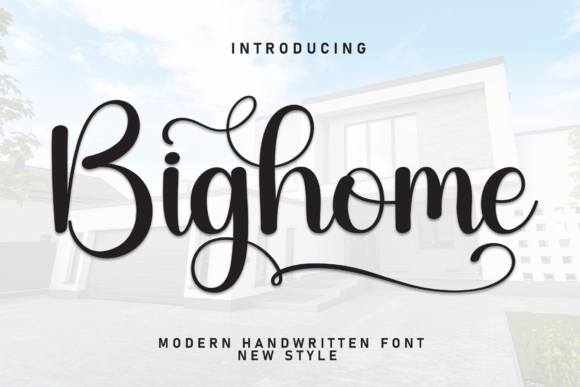
When a new typeface lands in my library, I don’t judge it by its specimen sheet. I judge it by the immediate, gut feeling it gives me when I throw it onto a blank canvas alongside a project brief. With Bighome, that feeling was a distinct sense of warmth. This isn’t a cold, technical script or a frantic, energetic hand-written scrawl. It’s a confident, flowing script that feels like a comfortable, welcoming invitation. The letters have a natural, almost conversational cadence.
A Personality Built for Connection
The first thing you notice is its balanced personality. It’s friendly without being childish, elegant without being aloof. The strokes have a lovely, consistent flow with subtle variations in the connections that prevent it from looking robotic. It avoids the extreme swashes or overtly vintage vibe of some script fonts, which gives it a modern typography feel. This makes Bighome’s visual personality remarkably adaptable. It doesn’t scream a single era or aesthetic; instead, it suggests quality, approachability, and a human touch.
In my mind, it immediately associated itself with projects built on connection. Think of brands that want to feel personal, premium, and trustworthy. A local bakery’s packaging, a boutique skincare label, a lifestyle blogger’s header graphics, a wedding stationery suite, or a craft seller’s logo mark. It belongs where the brand story is about care, creation, or a direct relationship with the audience.
Where Bighome Earns Its Place in Real Work
I’ve tested it across real-life scenarios, moving from initial sketches to final mockups. Here’s where it consistently performs.
For logo design and brand marks, particularly for small businesses and digital sellers, Bighome offers a solid foundation. Its full wordforms are cohesive. I’ve used it successfully for a ceramicist’s logo and a specialty coffee roaster’s wordmark. It carries enough unique character to be memorable without being distractingly ornate.
In packaging design and product labels, it shines as a primary or accent font. On a mockup for honey jar labels, it evoked artisan quality. On a tea box, it felt refined yet friendly. It works beautifully for the main product name or a short, evocative phrase like “Handcrafted” or “Family Recipe.”
For printable products and digital design assets—invitations, posters, flyers, blog graphics—it creates an elevated mood quickly. In editorial design for a feature headline, it added a personal voice. As a font for Canva templates or Cricut projects, its clear outlines and strong character make it a reliable, creative font choice for crafters and content creators.
In web design and social media graphics, use it sparingly for maximum impact. A website header with a brand name in Bighome immediately sets a tone. For social posts and digital ads, it’s perfect for a key quote or campaign phrase overlaid on an image. It grabs attention and feels less generic than a standard sans serif.
The Practical Designer’s Checklist for Using Bighome
Like any premium display font, Bighome requires thoughtful application. Here’s my practical workflow for putting it to work.
First, test it in black and white. A good script font holds its form without color. Bighome passes. Its weight distribution and spacing remain clear.
Second, check small-size readability. This is crucial. Script fonts are not for body text. Bighome works at moderate sizes for headlines and phrases, but avoid using it for any supporting text. Its strength is in display.
Third, try it on real mockups immediately. Don’t linger in the font menu. Place it on a photo of a product package, a website header mockup, or a social media template. This reveals how it interacts with imagery, colors, and other elements.
Fourth, compare uppercase and lowercase. Sometimes a font’s caps lock up awkwardly. Bighome’s uppercase letters are well-integrated with its lowercase flow, useful for acronyms or starting a word with a capital.
Fifth, review spacing in your actual composition. Depending on your software and letter combinations, you may need minor manual adjustments to kerning for perfect harmony.
Sixth, test it beside other fonts. Font pairing is critical. Bighome, as a script font, pairs elegantly with a clean, neutral sans serif font for body text. It also complements a sturdy serif font well, creating a balance of personality and tradition. Avoid pairing it with another dominant script or handwritten font; that creates competition, not hierarchy.
Finally, always confirm commercial licensing before client or business use. Ensure your use case is covered under Bighome’s license, especially for digital products or templates you intend to sell. This is a non-negotiable step for professional and ethical design work.
When to Use Bighome, and When to Step Back
Bighome affects readability, hierarchy, and brand consistency directly. Use it for large headlines, short phrases, brand marks, quotes, and decorative accents. It boosts visual mood and engagement by adding a human, crafted layer.
It builds audience trust and recognition when used consistently as a signature element—like a logo or a recurring graphic treatment on packaging. It conveys professionalism through its refined execution, not through corporate stiffness.
However, use it carefully. Never force it into long paragraphs. It is not a workhorse font; it is a spotlight font. Overuse dilutes its impact and can harm readability. Reserve it for moments where you want to inject warmth and personality into your brand identity, editorial design, or marketing visuals.
My Final Take: A Reliable, Warm Voice in Your Toolkit
After applying Bighome across multiple project types—from commercial design assets for a client’s rebrand to my own printable design templates—I’ve come to see it as a reliable, warm voice in my typographic toolkit. It doesn’t try to do everything. It excels at doing one thing very well: making a design feel personally addressed, cared for, and welcoming. For designers, brand owners, and creators looking for a script font that avoids cliché and offers modern, versatile charm, Bighome is a compelling choice. Just remember to use its voice where it matters most, and let quieter fonts do the rest of the talking.